Shower Installation & Repairs
in Manchester.
Powerful, Reliable, Leak-Free.
Whether you need a new shower installed, an existing one upgraded, or a broken unit repaired — we deliver a solution that works perfectly from day one. Fixed prices, clean installation, written guarantee.
Every shower installation pressure-tested before handover — zero callbacks for leaks
Overview
Shower Installation & Repair Services Explained
Your shower is the most-used fixture in your bathroom. A poor shower — weak pressure, inconsistent temperature, dripping valves — affects your daily routine more than any other plumbing issue. We install and repair every type of shower system available in the UK market, matched correctly to your home's water system.
Electric showers heat water on demand from the cold mains supply, making them independent of your boiler. They're ideal for homes with low hot water pressure or as a secondary shower in an en-suite. We install units from Mira, Triton, and Aqualisa, and can upgrade the electrical supply where needed for higher-powered units (9.5kW and above).
Mixer showers blend hot and cold water from your existing supplies. Thermostatic mixer valves maintain a constant temperature even when other taps are used in the house — critical for safety, especially in homes with children or elderly residents. We install bar mixers, concealed valve mixers, and shower columns with fixed heads and hand showers.
Power showers incorporate a built-in pump to boost water pressure. They're designed for gravity-fed systems (homes with a cold water tank in the loft) where mains pressure is insufficient for a satisfying shower. We also install standalone shower pumps for homes wanting boosted pressure without replacing the shower unit itself.
Walk-in showers and wet rooms are our speciality. These open-plan shower areas require precise waterproofing, gradient-formed floors, and high-quality drainage. We install linear drains, point drains, and channel drains, each matched to the floor design and flow rate requirements of the space.
Our Work
Real Examples of Our Work
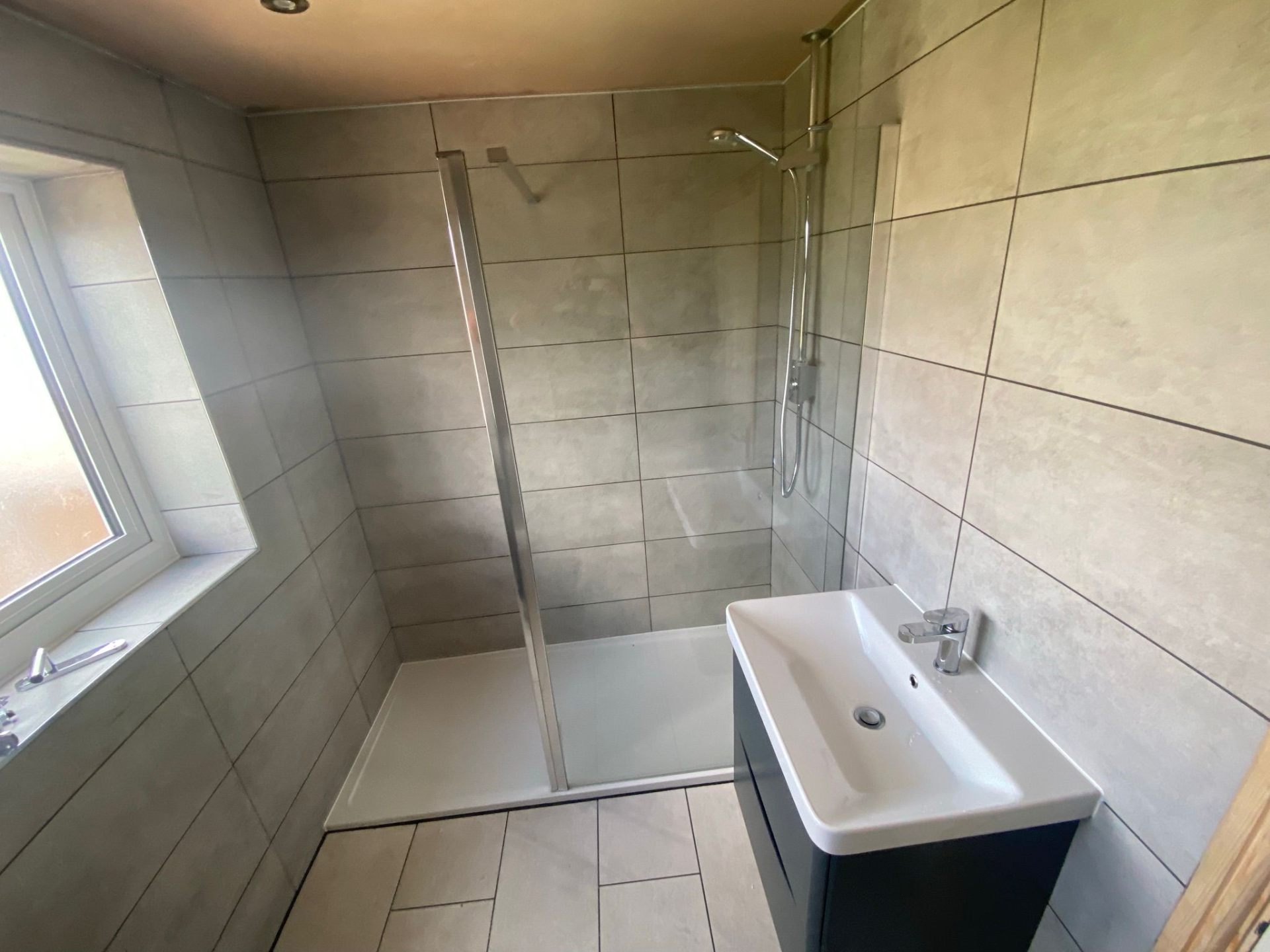
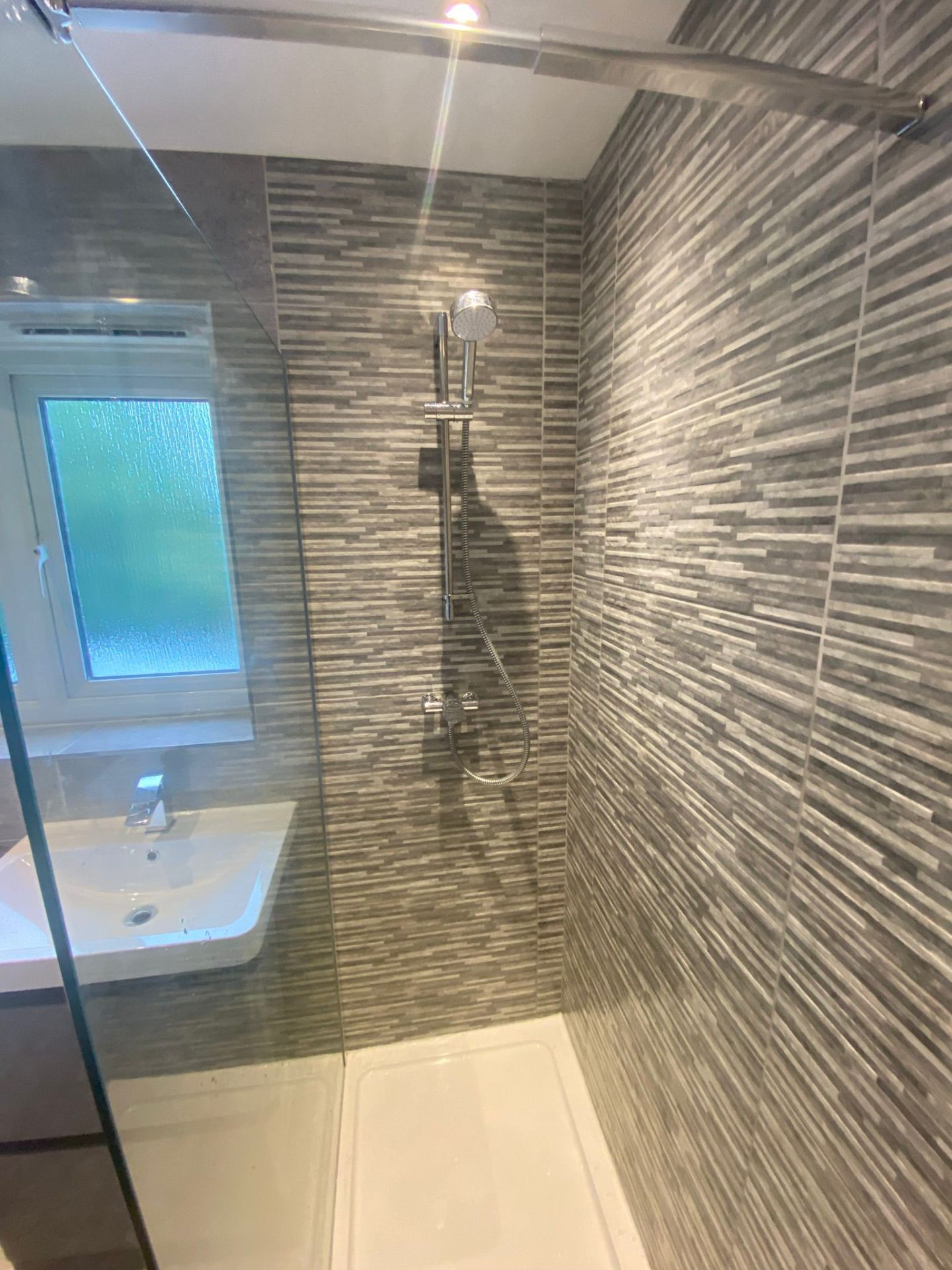
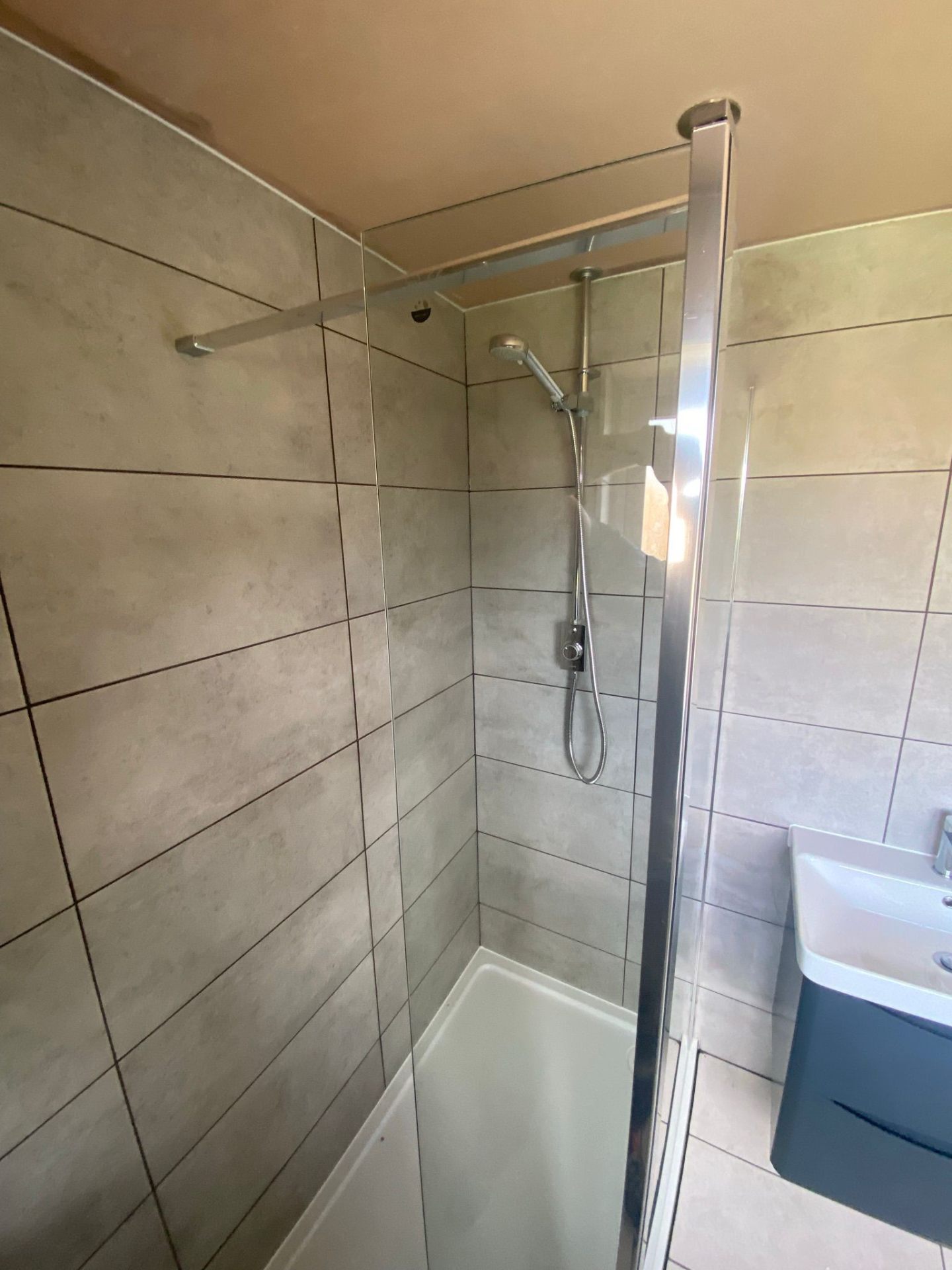
Why It Matters
The Consequences of Shower Problems Left Unresolved
A shower that drips after use wastes water, but the real damage happens where you cannot see it. Water tracking behind the shower wall through failed grout or silicone penetrates the backing board and the wall behind. In timber-framed houses, this moisture rots the structural timbers. In masonry homes, it causes plaster to blow and mould to colonise the wall cavity.
A cracked or poorly sealed shower tray is one of the most destructive plumbing failures in a home. Water runs under the tray with every shower, dripping through the floor into the room below. The damage is cumulative and often undetected until ceiling staining or sagging appears. By this point, the floor joists may be compromised and the ceiling below may need replacing.
Temperature fluctuations in non-thermostatic showers aren't just annoying — they're dangerous. When someone flushes a toilet or runs a kitchen tap, the cold water supply drops, causing the shower to spike in temperature. In extreme cases, this can cause scalding, particularly in homes with vulnerable occupants. A thermostatic mixer valve eliminates this risk entirely.
Low shower pressure isn't something you need to live with. It's almost always caused by an identifiable, fixable problem: a partially closed isolation valve, limescale-blocked shower head, undersized pipework, or inadequate pump capacity. Diagnosing the root cause takes 20 minutes. Living with weak showers for years costs nothing in money but a great deal in daily frustration.
How We Work
Our Proven Process
Assessment
We inspect your existing water system, measure water pressure and flow rates, and determine which shower type is best suited to your home.
Recommendation & Quote
Based on the assessment, we recommend the best shower solution and provide a fixed-price quote covering all materials, labour, and finishing.
Preparation
We prepare the installation area — tiling removal if needed, pipe routing, wall reinforcement for concealed valves, and waterproofing for walk-in showers.
Installation
The shower unit, pipework, tray (if applicable), screen, and all connections are installed. Every joint is tested under pressure before tiling over.
Testing & Handover
We run the shower through a full test cycle, check for leaks, verify temperature stability, and demonstrate the controls. Written guarantee provided.
Benefits
What You Get When You Choose DPS
Matched to Your System
We don't just fit the shower you bought — we verify it's compatible with your water system first. Wrong shower on wrong system equals poor performance. We get this right.
Pressure-Tested
Every connection is pressure-tested before any tiling or finishing begins. This costs us time but saves you thousands in potential leak damage.
Temperature-Safe
We recommend and install thermostatic valves as standard for family homes. Constant temperature regardless of what other taps are doing in the house.
Walk-In Specialists
We have extensive experience with walk-in showers and wet rooms — the waterproofing, drainage, and glass fitting that turns an ordinary bathroom into something special.
Same-Day Repairs
Shower repairs are often completed on the same day you call. We carry common parts — cartridges, seals, hoses, and heads — on the van.
All Brands Serviced
We install and repair showers from Mira, Triton, Aqualisa, Bristan, Grohe, Hansgrohe, Crosswater, and all other major UK brands.
In Detail
Shower Systems: Types, Components & Technical Considerations
Choosing the right shower system depends entirely on your home's water supply type. Manchester properties broadly fall into three categories: combination boiler systems (mains pressure hot and cold), gravity-fed systems (cold tank in loft, hot cylinder in airing cupboard), and unvented cylinder systems (mains pressure hot water stored in a pressurised cylinder). Each dictates which shower types will perform well.
Combination boiler systems deliver mains-pressure water directly. Thermostatic mixer showers and rain shower heads work excellently on these systems, provided the flow rate from the boiler is adequate (typically 10–12 litres per minute for a satisfying shower). Electric showers also work on combi systems but are less common since hot water is already available at mains pressure.
Gravity-fed systems produce lower pressure, typically 0.1–0.3 bar at the shower head. Standard mixer showers perform poorly on these systems without a pump. Options include installing a negative-head shower pump (Stuart Turner, Salamander, or Grundfos brands), switching to a mains-fed electric shower, or upgrading the entire system to an unvented cylinder for whole-house mains pressure.
Shower trays come in stone resin, acrylic, and ceramic. Stone resin is our recommended material — it's rigid, warm to the touch, and available in low-profile designs (25mm) for near-flush floor installation. Acrylic trays are lighter and cheaper but flex more, requiring careful support. Ceramic trays are durable but heavy and cold underfoot.
Shower enclosures range from simple bi-fold doors (ideal for small spaces) to walk-in panels, quadrant enclosures (for corner installations), and sliding door systems. Frameless glass panels use 8mm or 10mm toughened safety glass and require structural fixings into solid walls or reinforced stud walls. We install enclosures from Merlyn, Lakes, Roman, and Kudos.
Wet room construction requires a specialist approach. The entire floor area must be tanked with a continuous waterproof membrane. The floor is formed to a gradient (typically 1:60) directing water toward the drain. We use prefabricated gradient formers or screed to create the fall. Linear drains (positioned against the wall) are aesthetically cleaner and easier to tile around than central point drains.
Common shower repairs we carry out include: replacing thermostatic cartridges (the most common cause of temperature problems), fitting new shower hoses and heads, re-sealing shower trays, replacing cracked or clouded shower screens, fixing dripping shower valves, descaling shower heads and internal components, and replacing electric shower heating elements.
Shower valve rough-in dimensions vary by manufacturer. Concealed valves require recessing into the wall cavity — we check stud depth and pipe routing before committing to a concealed installation. In solid masonry walls (common in older Manchester homes), concealed valves require chasing into the brickwork, which is more labour-intensive but provides a cleaner finish.
FAQ
Frequently Asked Questions
Ready to Start Your Project?
Get a free, no-obligation quote today. We respond to every enquiry within 2 hours and back every project with a written guarantee.
Get a Free Quote
We respond within 2 hours
Related Services